
Why Is My Roof Wavy? When It’s Normal and When It’s Not.
By Kay LeRoy | Director of Marketing & Brand Development
Nomads Roofing
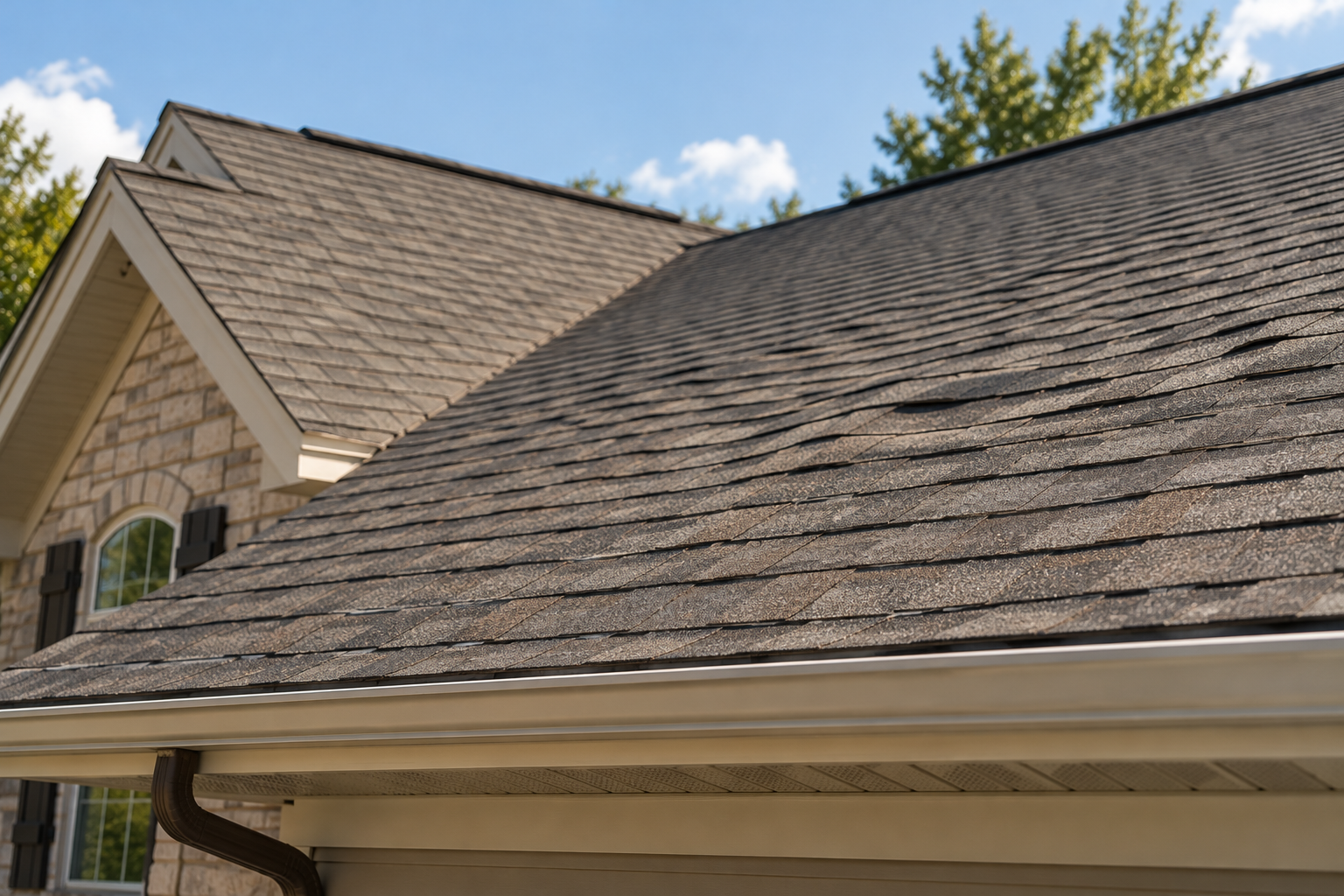
You step outside, look up at your roof, and notice something you’ve never paid attention to before.
The shingles don’t look completely flat.
Maybe you see a few raised areas. Maybe there are waves running across part of the roof. Or maybe your roof was just replaced, and you’re wondering why the brand-new shingles don’t look perfectly smooth.
So, is something wrong?
Not necessarily.
A roof can look wavy for several different reasons. Some are completely normal and may correct themselves with time. Others can point to something underneath the shingles that deserves a closer look.
The key is understanding the difference.
A New Roof May Need a Little Time
If your roof was recently replaced, some waviness can be normal.
Asphalt shingles are packaged in bundles, stacked, transported, stored, and then installed. When they first come out of the package, they may not immediately lie completely flat.
Temperature also plays a role.
Warmth from the sun helps asphalt shingles relax and seal. Depending on the weather when the roof was installed, that process may not happen immediately.
A roof installed during cooler weather may take longer to settle than one installed during warm, sunny conditions.
So if your new roof looks a little uneven on day one, it doesn't automatically mean something was installed incorrectly.
Sometimes It’s the Shingles
Shingles themselves can create temporary variations in the appearance of a roof.
They may have slight curves or raised edges after being packaged. Once installed and exposed to warmer temperatures, they can begin to settle into place.
That is one reason the appearance of a newly installed roof can change during the first several warm, sunny days after installation.
But if shingles remain lifted or noticeably uneven over time, there may be another reason.
Sometimes the “Wave” Is Actually Under the Shingles
Your shingles follow the surface underneath them.
If that surface isn't completely even, the finished roof may not look completely even either.
Underneath the shingles is roof decking, typically made from wood panels or boards. The decking creates the surface the roofing system is installed over.
If portions of the decking are uneven, damaged, deteriorated, or moving differently from surrounding areas, those differences may sometimes be visible through the finished roof.
In other words, what looks like a shingle problem from the ground may actually be coming from underneath the shingles.
What About the Lines You Can See Across the Roof?
Sometimes homeowners notice lines or slight raised areas where pieces of roof decking meet.
Wood naturally responds to changes in temperature and moisture. If decking panels are installed too tightly together, swell, or move over time, the seams between them can sometimes become more noticeable.
Depending on the roofing system and the condition underneath it, those variations may show through the shingles.
That doesn't mean every visible line indicates damaged decking. It simply means the shingles aren't always the source of what you're seeing.
Underlayment Can Affect Appearance Too
Between your roof decking and shingles is another protective layer commonly called underlayment.
If that material isn't lying properly or develops wrinkles underneath the shingles, it can sometimes affect the appearance of the finished roof.
From the ground, that can look like a raised area or wave.
Because the underlayment is hidden once the shingles are installed, determining exactly what is causing the appearance may require a closer evaluation.
Heat and Moisture Can Play a Role
Your attic and roof work together as a system.
Heat and moisture that aren't properly managed can affect roofing materials and the wood underneath them over time.
That's one reason roof ventilation matters.
Proper intake and exhaust ventilation help manage attic heat and moisture. When there are ventilation concerns, the effects aren't always immediately obvious from inside the home.
Sometimes changes to roofing materials or decking can become part of the story.
When Should Waviness Get Your Attention?
A little unevenness on a newly installed asphalt shingle roof can be very different from a roof that suddenly begins changing years after installation.
It may be worth taking a closer look if:
The waviness appears suddenly.
One section looks significantly different from the rest.
Shingles remain raised after plenty of warm weather.
Areas of the roof appear to sag.
Shingles look buckled rather than slightly uneven.
The roof feels soft when inspected by a professional.
The appearance continues getting worse.
You notice moisture or staining inside the attic or home.
One of these signs by itself doesn't automatically tell you what is wrong. It simply gives you a reason to determine what is causing it.
Wavy and Sagging Aren’t the Same Thing
This is an important distinction.
A slightly uneven shingle surface and a roof structure that is visibly sagging are not the same condition.
Sagging may involve the decking, framing, moisture damage, structural movement, or another issue underneath the roofing material.
If the actual roofline appears to dip or sag rather than the shingles simply looking uneven, that deserves more attention.
Don't Judge a New Roof Too Quickly
A homeowner just spent a significant amount of money on a new roof. Naturally, they're going to look at it more closely than they ever did before.
And suddenly, every bump and line becomes noticeable.
That's understandable.
But asphalt shingles sometimes need warmth and time to settle after installation.
The important thing is whether the appearance improves as the shingles have an opportunity to relax and seal or whether the condition remains, becomes more noticeable, or shows other signs of a problem.
Your Roof Doesn't Have to Look Like a Sheet of Glass
Roofs are built with layers of different materials, and homes themselves aren't always perfectly uniform.
Seeing a slight variation doesn't automatically mean something is wrong.
At the same time, homeowners shouldn't be expected to know whether the wave they're looking at is a harmless cosmetic variation or evidence of something happening underneath the roofing system.
Sometimes the answer is simply that the shingles need a little sunshine and time.
Sometimes there's something underneath them that needs attention.
Knowing the difference is what matters.