
Why Does My Roof Look Different After a Storm Even If No Shingles Are Missing
By Kay LeRoy | Director of Marketing & Brand Development
Nomads Roofing
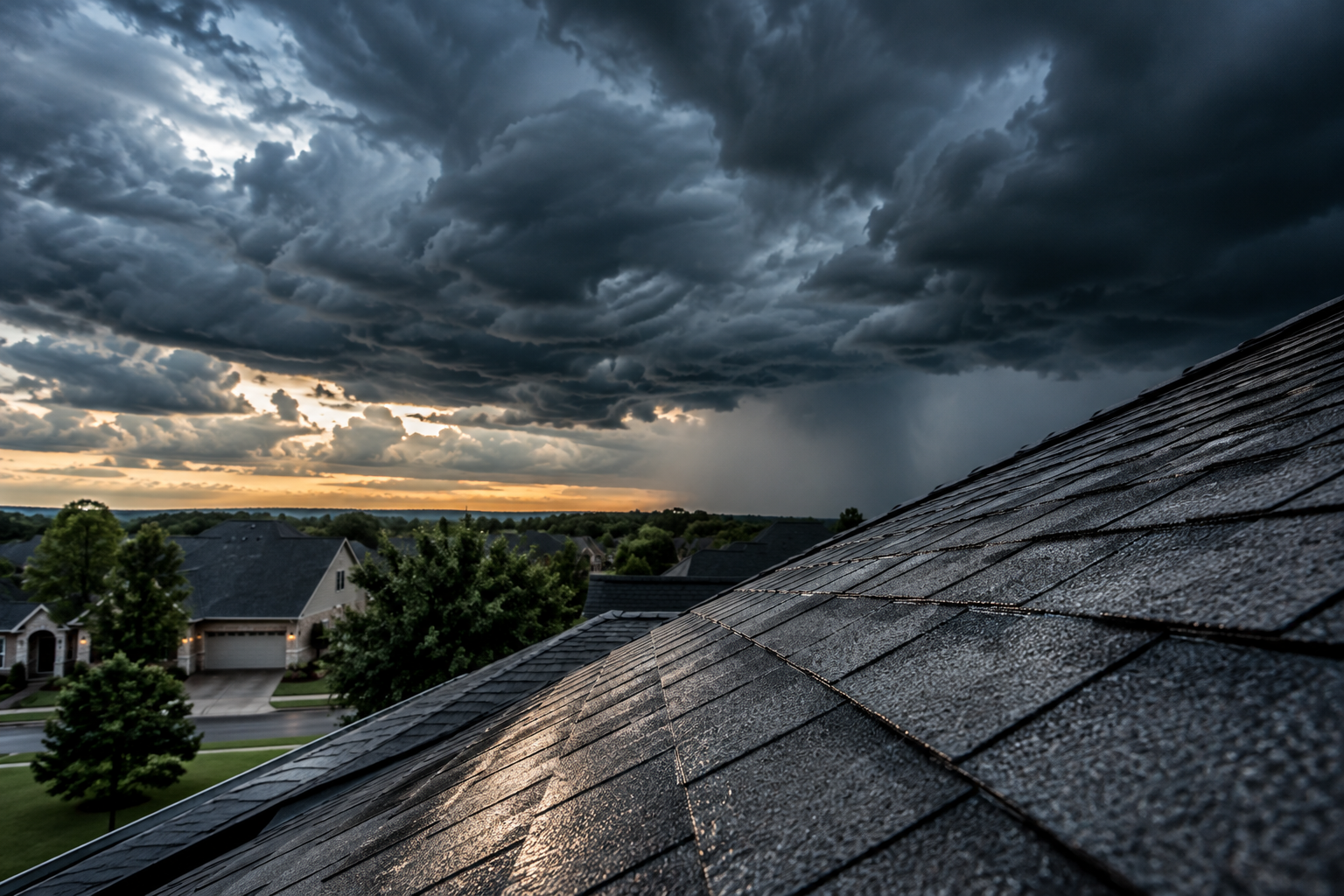
A storm rolls through.
The next morning, you walk outside, look up at your roof, and think:
“Well, all the shingles are still there. I guess we’re good.”
Maybe.
Missing shingles are one of the easiest signs of storm damage to spot from the ground, but they aren't the only thing that can happen to a roof during severe weather.
Sometimes a roof looks different after a storm even though every shingle is still technically in place.
So what changed?
A Shingle Doesn't Have to Blow Away to Be Affected by Wind
When we think about wind damage, we usually picture shingles scattered across the yard.
But wind can affect shingles without completely removing them.
Strong winds can lift the edge of a shingle and put stress on the material or its fastening points. In some cases, the shingle may settle back down afterward.
From the ground, it may still look like it's exactly where it belongs.
That's why simply counting shingles doesn't always tell you what happened during a storm.
What Is a Creased Shingle?
Think about bending a piece of cardboard and then laying it flat again.
The cardboard is still there, but you can see where it was bent.
Something similar can happen to an asphalt shingle.
If wind lifts a shingle far enough, the material may develop a crease.
The shingle may settle back into position afterward, making the condition difficult to see from the ground.
A crease doesn't automatically tell you everything about the roof, but it can provide evidence that a particular shingle has experienced movement.
Some Shingles May Look Lifted
After a storm, you might notice certain areas don't look quite as flat as they did before.
There are several reasons shingles can appear raised or uneven, and storm damage is only one possibility.
That's important.
Not every lifted-looking shingle should automatically be blamed on the most recent storm.
Installation, age, temperature, previous repairs, and the condition of the roofing materials can also affect how shingles sit.
The goal is to determine what actually happened rather than assume the storm caused every unusual-looking area.
Hail Doesn't Usually Leave a Perfect Hole
Hail damage is another condition that homeowners may have difficulty identifying from the ground.
People sometimes expect hail damage to look like obvious holes punched through the shingles.
That's usually not what you're looking for.
Hail can affect the surface of an asphalt shingle and its protective granules without creating a dramatic opening that can be seen from the driveway.
And because roofs already develop normal wear over time, identifying hail-related conditions requires more than simply finding a dark spot on a shingle.
Granules May End Up in the Gutters
Asphalt shingles have small protective granules across their surface.
Some granule loss happens naturally as shingles age.
After severe weather, homeowners may notice more granules collecting in gutters or near downspouts.
That can be worth paying attention to, but it doesn't automatically prove the roof has storm damage.
A newer roof, an older roof, and a roof that has just experienced severe weather can all shed granules for different reasons.
The amount, pattern, roof condition, and surrounding evidence all matter.
Your Roof May Suddenly Look Uneven
Sometimes homeowners don't notice a specific damaged shingle.
They just notice that something looks different.
Maybe one section appears raised.
Maybe a few shingles aren't lying the same way as the others.
Maybe a roofline that normally looked uniform suddenly catches your eye.
Those observations are useful.
You don't have to know exactly what you're looking at.
In fact, homeowners shouldn't be expected to diagnose roof damage from the ground.
Noticing that something changed is enough reason to take a closer look.
Storm Damage and Normal Aging Can Look Similar
This is where roof inspections become especially important.
Roofs already have a history before a storm arrives.
They may have normal wear, old repairs, manufacturing characteristics, foot traffic, installation conditions, or damage from previous weather events.
Then a storm comes through.
If someone looks at the roof afterward and assumes everything they see was caused by that storm, they may be overlooking the roof's previous condition.
On the other hand, assuming everything is simply normal aging can also miss legitimate storm-related damage.
The timing, location, pattern, and type of condition all help tell the story.
Your Roof Isn't the Only Place to Look
A storm can leave clues around the rest of the property too.
Depending on the type of weather, there may be damage to gutters, downspouts, siding, window screens, metal components, fencing, or other exterior surfaces.
Those conditions don't automatically prove that the roof is damaged.
But they can provide additional information about what happened at the property during the storm.
A roofing inspection should consider the bigger picture rather than focusing on one suspicious-looking shingle.
What If Your Neighbor Is Getting a New Roof?
After a major storm, roofing signs start appearing in yards.
Then dumpsters show up.
Then your neighbor's shingles start coming off.
Naturally, you start wondering:
“If their roof was damaged, does that mean mine is too?”
Not necessarily.
Two houses sitting next to each other can experience the same storm differently.
Roof slope, direction, materials, age, surrounding trees, installation, and the path of the storm can all affect what happens.
Your neighbor's roof can tell you that severe weather affected the area.
It can't tell you the condition of your roof.
What About a Leak?
Here's another common misconception:
“If the storm damaged my roof, wouldn't it be leaking?”
Not always.
Some roofing conditions don't immediately result in water entering the home.
A roof may have experienced damage while continuing to keep water out for the time being.
That's one reason waiting for a ceiling stain isn't always the best way to determine whether a roof made it through a storm.
At the same time, no visible damage doesn't automatically mean something is wrong either.
Sometimes a storm really does pass through and the roof performs exactly as it should.
That's good news.
Photos Matter After a Storm
When a roof is inspected after severe weather, documentation can be especially valuable.
Photos can show where a condition was found, what it looks like up close, and how it relates to the rest of the roof.
Instead of simply hearing “your roof has damage,” homeowners should be able to understand what was actually observed.
And if the roof looks good?
That should be explained too.
A storm inspection doesn't have to end with a roof replacement.
Different Doesn't Automatically Mean Damaged
After severe weather, homeowners naturally pay more attention to their roofs.
Things that may have been there for months suddenly become noticeable because you're specifically looking for them.
That's why the question isn't simply:
“Does my roof look different?”
It's:
“What am I actually looking at, and why does it look different?”
Sometimes the answer is storm-related damage.
Sometimes it's normal aging, an older repair, or something that was already there.
And sometimes the roof did exactly what it was designed to do and made it through the storm just fine.
Knowing the difference is much more useful than assuming every storm means you need a new roof—or assuming everything is fine just because all your shingles are still there.