
Why Do Roofing Estimates Vary So Much?
By Kay LeRoy | Director of Marketing & Brand Development
Nomads Roofing
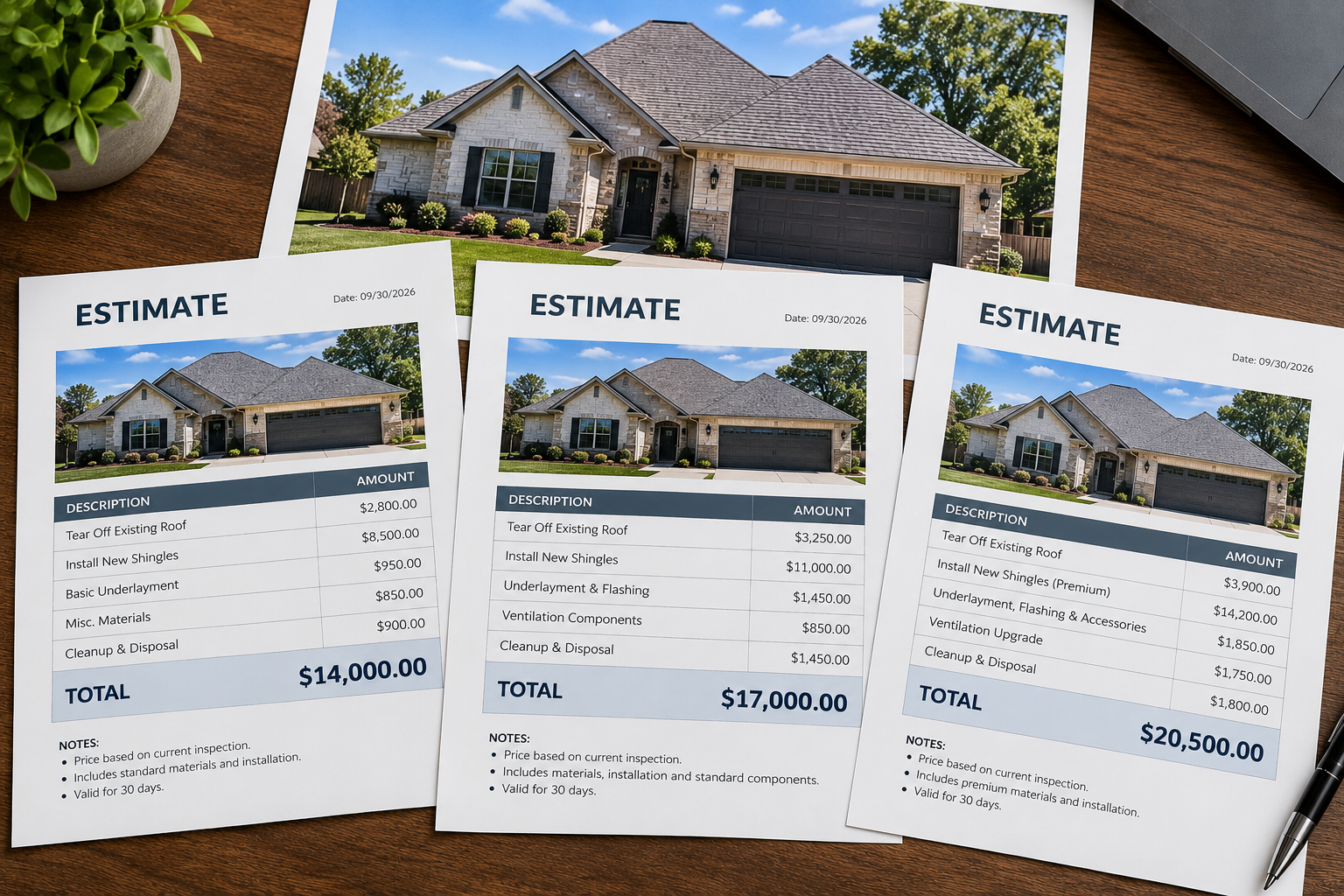
So here’s the thing.. You call three roofing companies for estimates... One comes back at $14,000. Another is $17,000. The third is over $20,000. They all looked at the same house. They’re all replacing the same roof. So why are the prices so different? It’s easy to assume one company is simply more expensive than another. Sometimes that may be part of the difference, but roofing estimates aren’t always comparing the exact same thing. Two contractors can both say “roof replacement” while proposing two very different roofing systems.
Start With What’s Actually Included
The total at the bottom of the estimate doesn't tell the whole story. One estimate may include removing the existing roof, replacing necessary flashing, installing new ventilation components, protecting vulnerable areas, cleaning up the property, and hauling away debris. Another may leave some of those items out or list them as additional charges. That doesn't automatically make one estimate better or worse. It means homeowners need to look beyond the final number and understand exactly what each contractor is proposing.
Not All Shingles Are the Same
“Asphalt shingles” describes an entire category of roofing materials—not one specific product. Manufacturers offer different product lines with different features, designs, warranties, and price points. Even two estimates using shingles from the same manufacturer may not be quoting the same product. When comparing estimates, look for the manufacturer, product line, and shingle being proposed, rather than simply seeing “architectural shingles” and assuming the materials are identical.
Your Roof Is More Than Shingles
Shingles may be what you see when you look at a finished roof, but they're only one part of the roofing system. Underneath and around them are other components that help manage water and protect the home.
Depending on the roof and the proposed scope, an estimate may include things such as:
Underlayment
Ice and water protection
Starter shingles
Ridge cap shingles
Drip edge
Flashing
Pipe boots
Roof vents
Sealants and fasteners
The type, amount, and quality of those materials can affect the price. A lower estimate may simply be proposing a different system.
Tear-Off and Disposal Cost Money Too
Before a new roof can be installed, the existing roofing materials may need to come off. That involves labor, equipment, trailers or dumpsters, cleanup, and disposal fees. The number of existing roofing layers can also affect the amount of work involved. Homeowners comparing estimates should look at whether tear-off and disposal are included rather than assuming they are automatically part of every price.
What Happens If Damaged Decking Is Found?
This is one of the most important questions to ask before a roofing project begins. The wood decking underneath your roofing materials cannot always be fully evaluated until the old roof is removed. If damaged or deteriorated decking is uncovered, it may need to be replaced before the new roofing system can be installed. Different contractors handle this differently. One estimate may clearly state a price for decking replacement if it becomes necessary. Another may include a certain amount. Another may not mention it at all. That difference may not change the initial estimate, but it can certainly change the final invoice.
Flashing Can Make a Big Difference
Chimneys, walls, valleys, skylights, and other roof transitions require special attention because they're areas where water needs to be properly directed. One contractor may plan to reuse certain existing flashing when appropriate. Another may include replacing it. Another estimate may not clearly explain what will happen at all. These details aren't very exciting compared with choosing a shingle color, but they can be important to the performance of the finished roof.
Ventilation May Be Different From One Proposal to Another
Roof ventilation isn't always handled the same way. One contractor may recommend keeping the existing ventilation system. Another may identify that changes are needed. Different ventilation products can also have different material and installation costs. If one estimate includes ventilation work and another doesn't, the totals naturally won't be the same.
Labor Is Part of What You’re Paying For
A roofing estimate isn't only a materials list. Roofing requires skilled labor, supervision, safety procedures, equipment, cleanup, and project management. Companies also operate differently. Insurance coverage, licensing requirements, training, warranties, office support, quality-control procedures, and other business expenses are reflected in what it costs a contractor to complete a project. Those things may not appear as individual line items on an estimate, but they're still part of the job.
The Cheapest Estimate Isn't Automatically Missing Something
A lower price doesn't automatically mean poor work. And a higher price doesn't automatically mean better work. That's why price alone doesn't give homeowners enough information to compare roofing proposals. A contractor may have different supplier pricing, overhead, crew structure, material choices, or business costs. The better question is, what am I actually getting for the price?
Look at the Warranty
The word “warranty” can mean several different things in roofing. There may be manufacturer coverage on the roofing materials and a separate workmanship warranty provided by the contractor. The length and terms of those warranties can vary. Before comparing two estimates based on warranty length alone, homeowners should understand what each warranty actually covers, who provides it, and what conditions apply.
Make Sure You're Comparing the Same Scope
Imagine comparing two restaurant bills. One includes the entrée, sides, drink, and dessert. The other only includes the entrée. Looking at the totals without looking at what was ordered wouldn't tell you which one costs more for the same thing—because they aren't actually the same thing. Roofing estimates can work the same way. Before comparing the bottom-line numbers, compare:
Materials. Scope. Removal. Components. Ventilation. Flashing. Decking terms. Cleanup. Warranties.
Once those details are side by side, the difference between two estimates often starts making a lot more sense.
A Good Estimate Should Help You Understand the Job
Homeowners shouldn't need to become roofing experts just to understand what they're buying. An estimate should give you enough information to understand what materials are being installed, what work is included, and how unexpected conditions will be handled. If two estimates are thousands of dollars apart, that doesn't necessarily mean one contractor is charging thousands more for the same roof. Sometimes, they're simply quoting two different versions of the job. And before deciding based on the number at the bottom of the page, it's worth finding out exactly what those numbers include.